
BIM Coordination Services & Structural Engineering
Integrated Structural Modeling & BIM Coordination
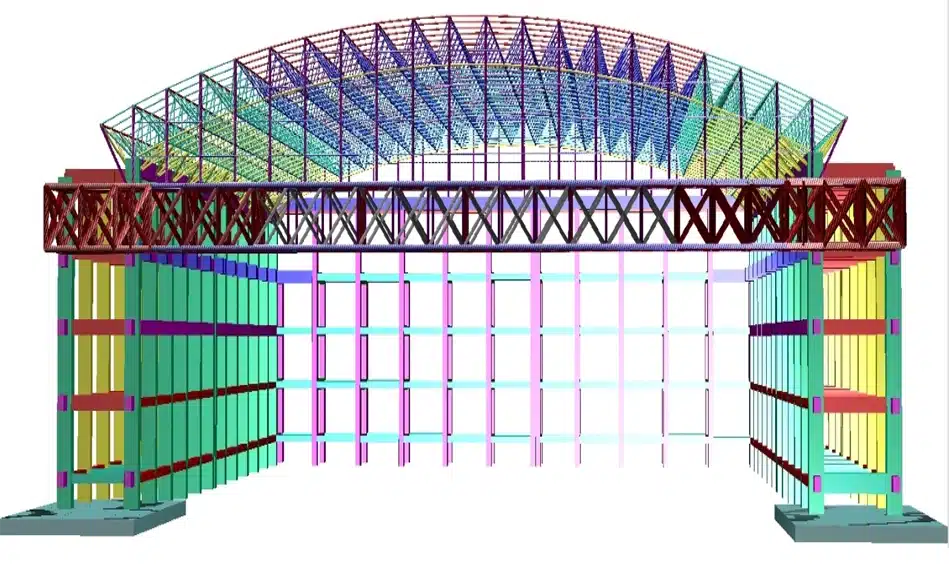
Steel Building USA supports projects with BIM-integrated structural coordination and related engineering support centered around precision modeling of steel studs and structural tracks for commercial and industrial applications. Coordinated digital models are developed that enhance constructability, reduce field conflicts, and ensure accurate steel stud system deployment from fabrication through installation.
Through Building Information Modeling (BIM), we digitally coordinate steel stud framing layouts, load paths, connection details, and component tolerances before materials reach the jobsite. This proactive modeling approach improves field performance, minimizes rework, and strengthens overall structural reliability.
Our BIM-driven workflow supports architects, developers, and contractors with clash detection, system integration, and installation sequencing—delivering coordinated structural steel stud systems designed for efficiency, code compliance, and long-term performance.
See how model coordination works in our BIM clash detection guide.
Our steel stud systems are engineered in accordance with International Building Code (IBC) requirements and recognized steel framing standards.
Free BIM Coordination Checklist
Prepare model inputs, scope, openings, MEP conflict zones, design criteria, clash-review responsibilities and fabrication handoff before coordination starts.
Benefits of Steel Building USA BIM-Integrated Structural Engineering for Steel Stud Systems
• Clash Detection & Coordination: Advanced BIM modeling identifies conflicts within steel stud framing systems before construction begins, reducing costly field modifications, delays, and RFIs.
• Improved Constructability: Our model-based engineering approach enhances steel stud detailing, connection accuracy, and installation sequencing—ensuring systems are practical, efficient, and field-ready.
• Enhanced Project Accuracy: Precision 3D structural models improve dimensional control across steel studs, tracks, and structural components, minimizing coordination errors across trades.
• Code-Compliant Engineering: All steel stud systems are developed in accordance with applicable IBC, AISI, ASTM, and AISC standards, with stamped structural calculations available where required.
• Streamlined Communication: BIM coordination improves collaboration between architects, MEP engineers, contractors, and owners, ensuring steel stud framing integrates seamlessly with mechanical and electrical systems.
• Reduced Risk & Cost Exposure: Early-stage steel stud coordination lowers change orders, accelerates scheduling, and strengthens overall project cost control.
Why Choose Steel Building USA for BIM-Integrated Structural Engineering?
Steel Building USA delivers precision-driven structural engineering powered by advanced Building Information Modeling (BIM) workflows, with specialized coordination of steel studs, tracks, and structural framing systems. Our integrated modeling approach enhances alignment between architectural, structural, and MEP systems—reducing clashes, minimizing rework, and improving overall project efficiency.
Our engineering team develops detailed BIM models that define steel stud layouts, load paths, connection details, and constructability sequencing before fabrication begins. This proactive coordination strengthens dimensional accuracy, improves installation efficiency, and reduces field-driven design changes.
With a focus on constructability, code compliance, and execution readiness, we engineer steel stud systems in accordance with IBC, AISI, ASTM, and AISC standards. We collaborate closely with developers, architects, and contractors to ensure structural systems align seamlessly with design intent, fabrication processes, and real-world jobsite conditions.
Contact Steel Building USA today to discuss how our BIM-integrated steel stud engineering services can reduce risk, strengthen coordination, and improve performance on your next commercial or industrial project.
Call For a Quote:
(833) 77 STEEL
F.A.Q.
Got questions about our Building Information Modeling (BIM) workflows? We’ve got answers! Use our contact form if you’d like to learn more.
What are the advantages of BIM-integrated structural engineering?
BIM-integrated structural engineering enhances coordination, accuracy, and constructability. By developing detailed 3D structural models, potential conflicts between structural, architectural, and MEP systems are identified early — reducing change orders, RFIs, and costly field modifications. This approach improves project efficiency, cost control, and schedule reliability.
How does BIM improve structural coordination?
Building Information Modeling (BIM) enables real-time coordination between disciplines. Structural systems are modeled with precision and aligned with architectural layouts and mechanical systems, improving spatial accuracy and minimizing installation conflicts before construction begins.
Can Steel Building USA provide stamped structural calculations?
Yes. Where required, we provide engineer-stamped structural calculations in accordance with applicable IBC, AISC, AISI, and ASTM standards. Our engineering services are developed to meet jurisdictional and project-specific compliance requirements.
What types of projects benefit from BIM-integrated structural engineering?
Commercial, multifamily, industrial, and residential developments benefit from BIM-driven coordination. Projects with complex layouts, tight tolerances, phased construction, or multi-trade integration particularly benefit from early-stage structural modeling.
What is the next step to get started?
Contact Steel Building USA to discuss your project scope, design phase, and coordination needs. Our team will review your plans and determine the appropriate BIM modeling and structural engineering support to align with your project goals.
What categories of load-bearing metal stud walls can be coordinated in BIM?
BIM coordination can support a range of cold-formed steel wall conditions, including load-bearing and non-load-bearing stud walls, corridor and shaft walls, exterior wall framing, multi-story wall systems, framed openings, headers, jamb conditions, and wall interfaces with floor and roof framing. The exact wall type, member sizes, connections, loads, fire-resistance requirements, and delegated-design responsibilities depend on the project drawings, engineer-of-record criteria, and applicable code requirements.
For projects with complex MEP routing, large openings, or multiple structural interfaces, coordinated models can help identify conflicts earlier and clarify what information must be resolved before fabrication or panelization.


Supporting Structural Systems

Commercial Steel Building Structures
Code-compliant steel building systems engineered for scalable commercial and mixed-use applications.

Industrial Steel Structures
Heavy-duty structural systems engineered for operational continuity, equipment housing, and critical infrastructure support.

RTA Structural Building Kits
Pre-engineered structural framing packages delivered with fabrication-ready documentation for streamlined commercial deployment.