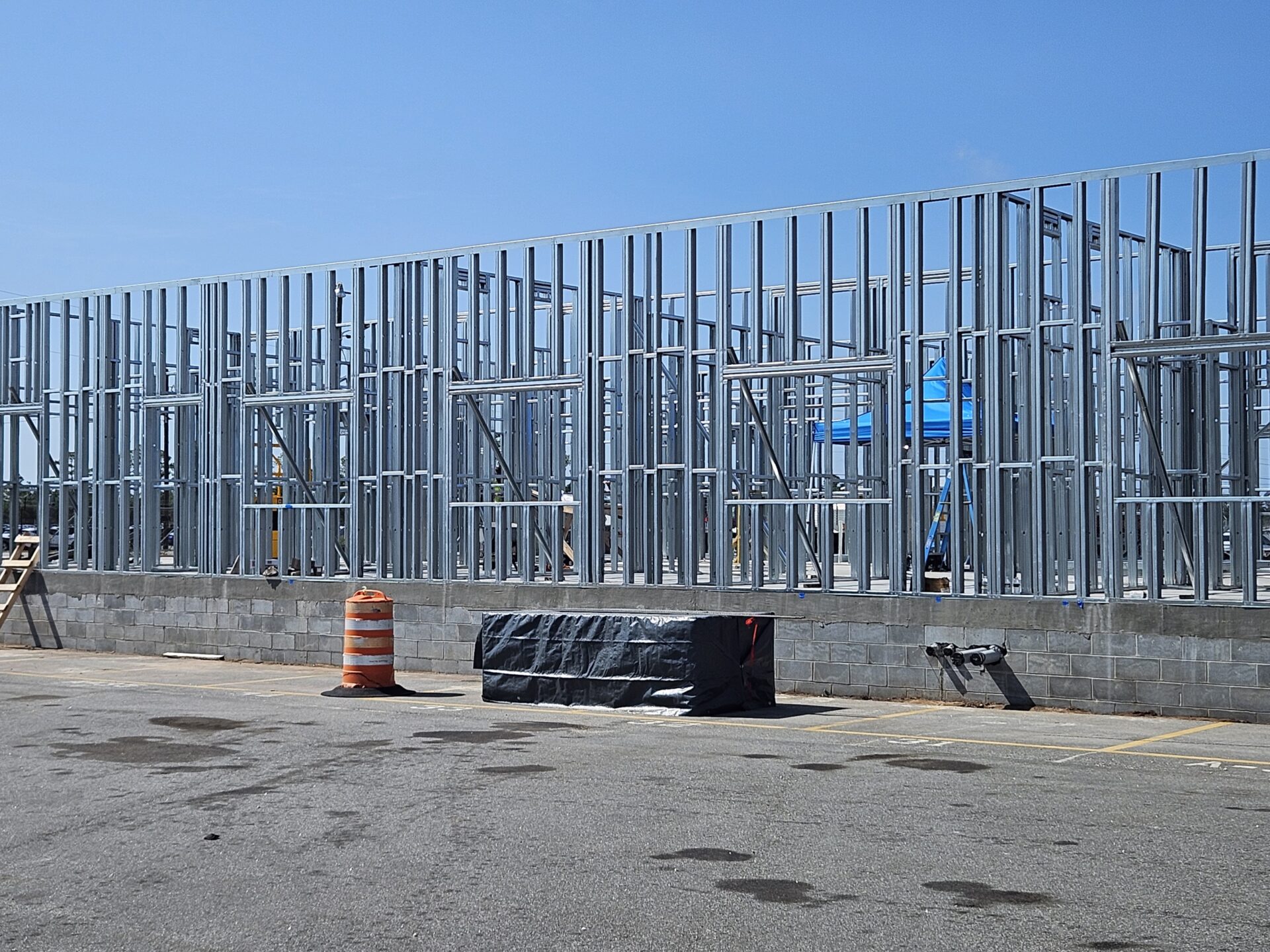
Steel Framing Benefits for Residential and Commercial Construction
The Benefits of Steel
Steel framing benefits extend far beyond structural strength. From fire resistance and dimensional stability to faster installation and long-term cost efficiency, light gauge steel framing delivers performance advantages that traditional wood construction cannot match.
Builders, developers, and property owners nationwide rely on steel framing for durability, sustainability, and predictable project outcomes.
Steel Framing Benefits: Why It Outperforms Traditional Materials
Steel framing benefits go beyond basic durability. Engineered light gauge steel delivers unmatched structural performance, dimensional stability, fire resistance, and long-term cost efficiency. Compared to traditional wood framing, steel provides predictable quality, reduced material variability, and enhanced lifecycle value.
Core Steel Framing Benefits
Highest strength-to-weight ratio of common framing materials
100% recyclable and environmentally sustainable
Non-combustible — does not contribute fuel to fire spread
Inorganic — will not rot, warp, split, crack, or attract pests
Dimensionally stable — does not expand or contract with moisture
Manufactured to strict national engineering standards
Extended structural service life
Benefits to the Consumer
High strength results in safer structures with slower structural aging and fewer long-term repairs
Potential property insurance savings due to non-combustible construction
Reduced overall construction costs, often 10–20% depending on design and market conditions
Lower likelihood of foundation movement due to lighter structural weight
Improved seismic performance — lighter mass with stronger mechanical connections reduces seismic forces
Superior wind resistance — screwed and riveted steel connections outperform traditional nailed assemblies
Greater architectural design flexibility
Faster project completion timelines
Reduced long-term maintenance expenses
Improved energy efficiency when properly detailed and insulated
Minimal thermal expansion and contraction
Reduced air infiltration with precision framing
Resistant to insects, termites, and organic decay
Benefits to Builder
- Workers comp insurance reduction (approx 26% nationwide)
- Substantial sub-structure savings (25% less footings)
- Lower builders risk insurance by 85%
- Code and engineering compliance typically met at controlled design stage
- Environmental selling and green positioning
- Straight walls and square corners
- Callbacks due to cracks are eliminated
- Windows and doors open and close as they were designed
- Waste 2% for steel 20% for timber
- Reduced disruption to nearby buildings
- 3X faster than stick framing
- Reduced soil reports
- 50% less hardware
- Design flexibilty
- Efficient transportation
- Reduced shipping costs
- Supply chain control (lumber prices change weekly)
- Less manpower
- Less injuries
- Highly skilled labor reduced
- Faster ROI
- Reduced equipment rental
- Better overall product (structurally and aesthetically)
- Improved quality control
- Better takeoff accuracy
- Reduced warranty claims
- Carbon footprint reduction
- Easy material selection no need cull or sort
- Build year around
- Build in sandy soil
- Reduced security costs
- LEED Program points
- Less framing material (typically 24″ O.C. vs 16″ O.C. with wood)
- Flame retardent coating option for improved fire rating and insurance savings
Benefits to Architects and Engineers
- Innovative building shapes
- Non-conventional rooflines
- Structural flexibility
- Design possibilities are endless
- Better client experience
- Larger internal space (narrow walls)
- Reduced load bearing walls
Benefits to all trades
- Reduced equipment costs
- Reduced tool costs
- Faster Installation
- Reduced material costs
- Reduced load bearing walls
- Less cleanup
- Straight and square walls and ceilings
- 50% less hardware
Benefits to Framer
- Reduced equipment and tools
- Reduced scaffold rent times
- Reduced or no crane/pettybone costs
- Faster installation
- Precut and precisely measured components
- Labeled wall assemblies
- 50% less hardware
- 95% less pickup
- NO straight edging
- Quicker/stronger backing installation
- Reduced material costs
Benefits to Plumber
- Pre punched service holes (exact elevation locations including sloped)
- Reduced equipment and tools
- Faster installation
- Reduced material costs
- No drilling
- No nail plates
- Reduction in fittings
- 75% longer pipe runs
- Trim labor reduction (predictable backing locations)
Benefits to HVAC
- Pre punched service holes (floor joists only)
- Reduced equipment and tools
- Faster installation
- Reduced material costs
- No drilling
- No nailplates
- Reduction in fittings
- 65% longer pipe/duct runs
Benefits to Electrician
- Pre punched service holes
- Reduced equipment and tools
- Faster installation
- Reduced material costs
- No drilling
- No nailplates
- Inside corner wire routing labor drastically reduced
- 80% longer wire runs
- Better/easier wire management
Benefits to Insulator
- Reduced equipment and tools
- Faster installation
- Reduced material costs
- Consistent layout
- Less cutting
- Reduced fire barrier
- Reduced blocking in internal wall assembly
Benefits to Drywaller/Taper
- Reduced equipment and tools
- Faster installation
- Reduced material costs
- Straight and square walls
- No nail plates (no bulging)
- 50% less hardware (no cutting around)
- 95% less floating/darby
- Faster fireproofing
Benefits to Finish Carpenter
- Reduced equipment and tools
- Faster installation
- Reduced material costs
- Less caulking
Benefits to Painter
- Reduced equipment and tools
- Faster installation
- Reduced material costs
- Cleaner and faster cut in
- 75% less caulking
Benefits to Finish Trades
- Straight walls and square corners
- Faster installation
- No grinding or scribing
- Less shimming